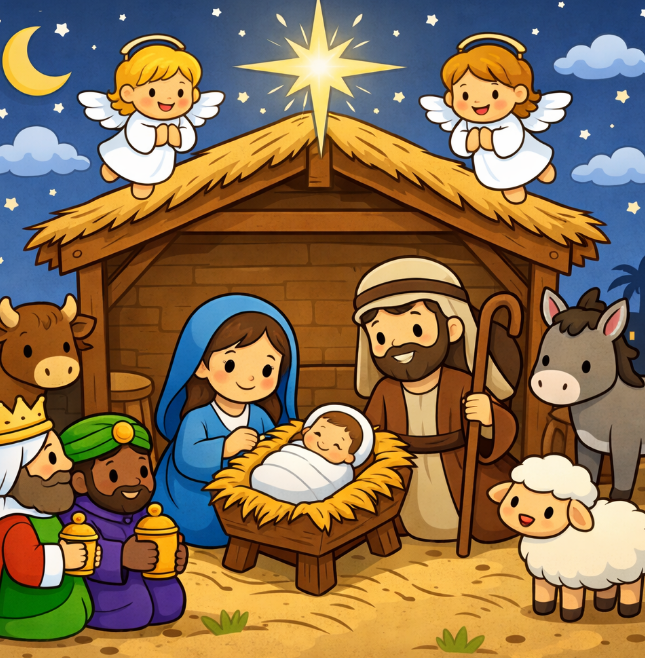
Christmas Is God Moving Toward Us
Christmas is not primarily about nostalgia, tradition, or even generosity—though all of those flow from it. At its heart, Christmas is about God moving toward humanity.
The apostle John captures this mystery in a single sentence:
“The Word became flesh and dwelt among us, and we have seen his glory” (John 1:14, ESV).
This is the shocking claim of Christianity: that the eternal God did not remain distant, but entered history, took on human flesh, and lived among ordinary people. Christmas celebrates not humanity reaching up to God, but God coming down to us.
The Humility of the Incarnation
The story of Jesus’ birth is intentionally unimpressive by worldly standards. No palace. No political announcement. No royal escort. Instead:
“She gave birth to her firstborn son and wrapped him in swaddling cloths and laid him in a manger” (Luke 2:7).
The King of kings entered the world in vulnerability. The Creator depended on a mother. The One who sustains all things learned to walk and speak.
Paul later explains the theological weight of this moment:
“Though he was in the form of God, [he] did not count equality with God a thing to be grasped, but emptied himself” (Philippians 2:6–7).
Christmas confronts our assumptions about power. God reveals His glory not through dominance, but through humility, obedience, and love.
Emmanuel: God With Us
Matthew’s Gospel reminds us that Jesus’ birth fulfills ancient prophecy:
“They shall call his name Emmanuel (which means, God with us)” (Matthew 1:23; Isaiah 7:14).
This name is not symbolic—it is theological truth. Christmas declares that God is not indifferent to suffering, confusion, or brokenness. He steps into it.
For those feeling weary, isolated, or burdened during the holidays, Christmas offers reassurance: God is present. He is not watching from afar. He knows human pain from the inside.
“For we do not have a high priest who is unable to sympathize with our weaknesses” (Hebrews 4:15).
Good News for Ordinary People
When the angels announce Jesus’ birth, they do not go to kings or scholars. They go to shepherds—working-class laborers on the margins of society.
“I bring you good news of great joy that will be for all the people” (Luke 2:10).
This is central to the Christmas message. The gospel is not reserved for the powerful or the polished. It is good news for the overlooked, the tired, the sinner, and the seeker.
Evangelical faith emphasizes this truth: salvation is not earned through status or effort, but received by grace.
“For by grace you have been saved through faith… not a result of works” (Ephesians 2:8–9).
Christmas and the Cross Are Connected
It is tempting to separate the manger from the mission—but Scripture never does. Jesus was born to save.
The angel tells Joseph:
“You shall call his name Jesus, for he will save his people from their sins” (Matthew 1:21).
Christmas points forward to Good Friday and Easter. The child in the manger is the Savior who will carry a cross. Love motivates the incarnation.
“For God so loved the world, that he gave his only Son” (John 3:16).
Christmas is not merely sentimental—it is redemptive.
How Should We Respond?
The shepherds respond with worship and obedience:
“They made known the saying that had been told them… and returned, glorifying and praising God” (Luke 2:17–20).
Mary responds with humility and trust:
“Behold, I am the servant of the Lord; let it be to me according to your word” (Luke 1:38).
An evangelical response to Christmas involves the same posture:
- Worship instead of distraction
- Gratitude instead of entitlement
- Faith instead of fear
A Christmas Prayer
As we celebrate Christmas, may we remember that God’s greatest gift was not comfort, but Christ.
“Thanks be to God for his inexpressible gift!” (2 Corinthians 9:15)
May this season draw us not just to tradition, but to transformation. Not just to celebration, but to worship. And not just to Bethlehem—but to Jesus Himself.
Call to Reflection:
How does the reality of God with us change the way you approach this Christmas season?